Annapurna Region
The most varied trekking region in Nepal and the most accessible — everything from a three-day ridge walk to a three-week circuit over a 5,416 m pass, all starting from Pokhara.
, Nepal
5,416m
Max Elevation
3-21 days
Duration
Easy to Challenging
Difficulty
🗓️
Best Time
March to May, October to November
About Annapurna Region
The region that has a trek for everyone, which is the problem
The Annapurnas run from 1,000 m farmland to a 5,416 m pass, and you can reach every trailhead by road from Pokhara. That range is the region's great advantage and the reason people choose badly: a first-time trekker books the Circuit and struggles, or an experienced one books Poon Hill and is bored by lunchtime on day two.
The useful question is not "which is the best Annapurna trek" but "how many days do I have, and how high am I willing to sleep".
| Days | Route | Sleeps as high as | Character |
|---|---|---|---|
| 3–4 | Poon Hill, Khumai Danda | 2,900 m | Foothill ridges, lodges, no altitude risk |
| 4 | Mardi Himal, Muldai, Kori Danda | 3,580 m | Higher ridges, thinner air, better views |
| 7 | Khopra Danda | 3,660 m | Community lodges, Dhaulagiri head-on |
| 7–12 | Annapurna Sanctuary | 4,130 m | A valley walk into an amphitheatre of peaks |
| 11–16 | The Circuit | 4,850 m | A high pass and a complete change of country |
| 12–16 | Nar Phu, Dhaulagiri | 5,050 m | Restricted or camping; serious trips |
The road has changed this region — be wary of old itineraries
If you are reading a guidebook more than a few years old, ignore its day counts. Roads now run a long way up both the Marsyangdi and the Kali Gandaki, and the classic three-week Circuit largely no longer exists as a walking route: the first four or five days are spent beside traffic.
The honest modern Circuit starts at Chame or beyond and runs ten to fourteen days. An operator selling you twenty-one days without explaining what you will be walking next to is selling you the dust.
The same applies in reverse to the foothills. Jeep tracks now reach Kimche, Kande and Siding, which is why a genuine Poon Hill or Mardi trek can be done in four days when it used to need six.
The four sub-areas, and what distinguishes them
The Sanctuary
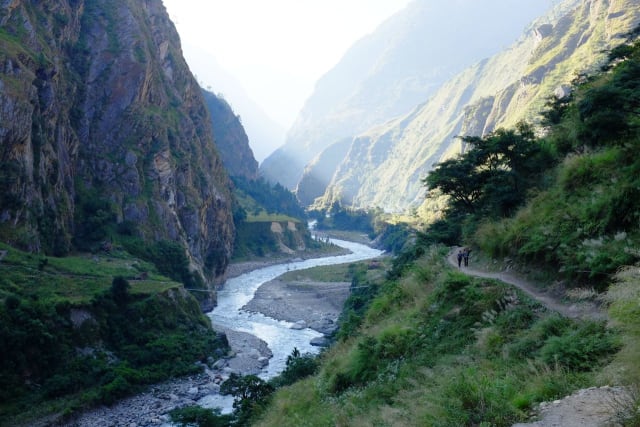
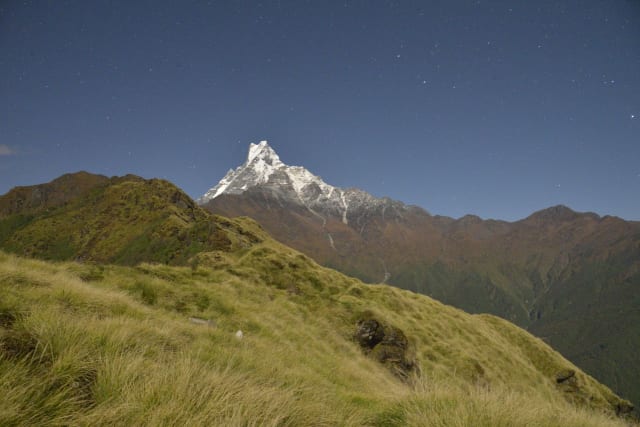
A narrow gorge that opens into a glacial amphitheatre at 4,130 m ringed by Annapurna South, Hiunchuli and Machhapuchhre. It is enclosed rather than panoramic, and it is the one route here that still works in poor weather because the place itself is the point.
The Circuit and the high north
The only route in the region that crosses a major pass. North of Thorong La the country changes completely — dry, Tibetan, in the rain shadow — which is why the Circuit feels like two treks rather than one.
The foothill ridges
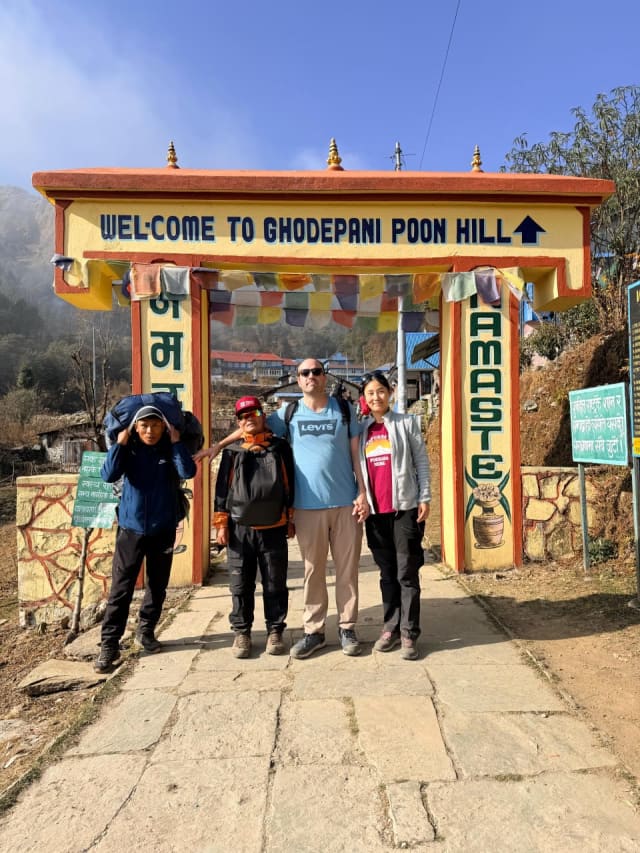
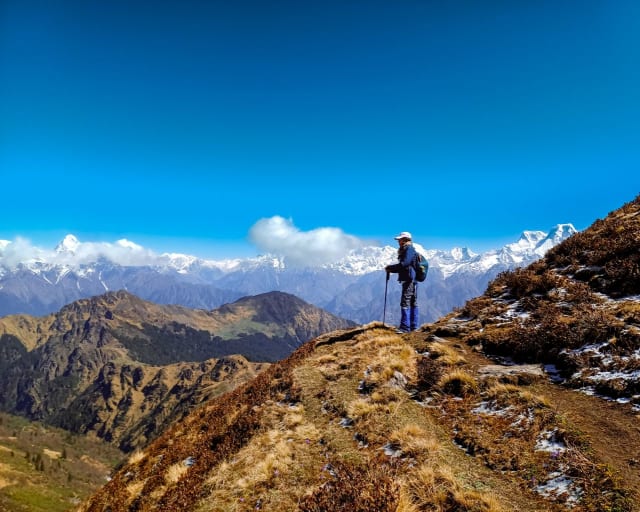
Poon Hill, Mardi, Muldai, Khopra, Mohare, Khumai and Kori: short walks to viewpoints between 3,200 and 3,700 m. Comfortable lodges, no meaningful altitude risk, and two eight-thousanders — Dhaulagiri and Annapurna I — visible from several of them. The best first trek in Nepal is in this group.
The restricted and camping routes
Nar Phu needs an agency-issued restricted-area permit and a licensed guide; Dhaulagiri needs a full camping crew and crosses two passes above 5,200 m. Both are a long step up from everything above.
Crowds, and how to avoid them without leaving the region
Poon Hill at sunrise in October can have several hundred people on the platform. That is the only genuinely crowded spot in the region, and it has close substitutes almost nobody uses: Muldai is 427 m higher and usually has under twenty people on it; Mohare Danda looks straight at Dhaulagiri from community-owned lodges; Kori Danda faces the eastern Annapurnas, which almost nobody photographs.
If solitude matters more than the famous name, the region will give it to you for the price of one extra day.
Permits
- ACAP — Annapurna Conservation Area Project entry permit, required everywhere in the region
- TIMS — Trekkers' Information Management System card, still required here unlike in the Khumbu
- A restricted-area permit additionally for Nar Phu and Upper Mustang, issued only through a registered agency
When to go
October and November are clearest and busiest. March to May brings the rhododendron forests into flower, which on the Ghorepani–Tadapani stretch is worth planning a trip around, with hazier peaks. December and January are cold, exceptionally clear and nearly empty, with Thorong La liable to close.
The monsoon is poor across the region with one exception: Upper Mustang sits in the rain shadow and is genuinely in season in July and August, when nothing else in Nepal is.
Where to go next
- Pokhara — A lakeside town at 820 m with the Annapurnas 30 km away
- Upper Mustang — A former Tibetan kingdom in the rain shadow north of the Annapurnas
- Muktinath & Jomsom — A temple at 3,800 m held sacred by Hindus and Buddhists alike, in the arid Kali Gandaki valley
Related activities: Trekking in Nepal, Village Homestays in Nepal, Paragliding in Pokhara, Photography Tours in Nepal.
Or see every trip we run: all trekking and tour packages.
Key Highlights
Routes from 3 to 21 days, all reached by road from Pokhara
Thorong La (5,416 m), the high point of the classic circuit
The Annapurna Sanctuary, an amphitheatre ringed by 7,000 m peaks
Quiet community-owned trails at Khopra, Mohare and Kori
Two 8,000 m massifs visible from a single foothill viewpoint
No internal flight required for any route in the region
Geography & Terrain
The region features diverse landscapes from lush valleys to towering peaks.
Culture & People
Experience rich cultural heritage and warm hospitality of local communities.
Wildlife & Nature
Diverse flora and fauna unique to the Himalayan ecosystem.
Conservation
Protected areas ensure preservation of this unique ecosystem.
Available Packages
Choose from our carefully crafted packages designed to showcase the best of this destination






Travel Tips for Annapurna Region
Essential information to help you prepare for your adventure and make the most of your journey
Emergency Contacts
Tourist Police
+977-1-4247041
Shamar Treks
+977-9849052053
Emergency Services
100 (Police) / 102 (Ambulance)