Bird Watching
Explore Bird Watching
Over 880 recorded species in a country the size of England — the result of running from subtropical plains to 8,000 m in under 200 km.
Why a small country has so many birds
Nepal is roughly the size of England and records over 880 bird species — close to a tenth of all the species on earth. The reason is not size but relief.
The country runs from about 60 m in the southern plains to 8,849 m in under 200 km horizontally. Stacked into that gradient are subtropical forest, subtropical grassland, temperate broadleaf, coniferous forest, alpine scrub and high-altitude desert. Each holds a different bird community, and you can drive between several of them in a day.
That compression is what makes Nepal a serious birding destination rather than an incidental one — trip lists of 250 to 350 species in two weeks are routine.
Where to go, and what each is for
Koshi Tappu, in the eastern Terai, is the single best birding site in the country and the one dedicated birders come for. A wetland reserve on the Koshi floodplain, it is the key site for waterfowl and waders, and holds records of species that occur nowhere else in Nepal. Peak season brings enormous numbers of migrants using the Central Asian flyway.
Phulchowki, the highest hill on the Kathmandu valley rim at around 2,780 m, is remarkable for being an hour from the capital. A single road climbs through subtropical to temperate forest, and you can bird several altitude bands in a morning — cutias, laughingthrushes, minivets, and a good chance of scarlet finch.
Chitwan and Bardia hold over 500 species each, and are where you combine birds with large mammals. The riverine grassland specialists here — florican, grass warblers — are hard to find anywhere else.
The trekking routes deliver the high-altitude birds. Himalayan monal, Nepal's national bird, is common enough on the Annapurna and Everest trails that most trekkers see one without trying. Blood pheasant, snow partridge and lammergeier come with altitude.
The endemic
Nepal has exactly one endemic bird species: the Spiny Babbler, found nowhere else on earth. It was known from nineteenth-century specimens, then not recorded for around a century, and was rediscovered in 1948 by the ornithologist Sidney Dillon Ripley.
It is a skulking, unspectacular brown bird in scrubby hillside. Birders travel a long way for it anyway, which tells you something about birders. Phulchowki and the Kathmandu valley rim are reliable.
When to come
February to April is the strongest overall: residents are breeding and singing, which makes them findable, and the spring migration is moving through.
November to January is peak for waterfowl and wintering migrants at Koshi Tappu, and the air is at its clearest.
The monsoon is poor for access but is when the breeding season peaks at altitude, which is why some specialist trips run then despite the conditions.
Guides
Worth it here more than almost anywhere. Nepal's bird guides work largely by call, and in dense forest the difference between a guided and an unguided morning is not marginal — it is the difference between forty species and a hundred and forty. Bring binoculars; a scope earns its weight at Koshi Tappu and nowhere else.
Available Packages
Choose from our carefully curated packages for this activity
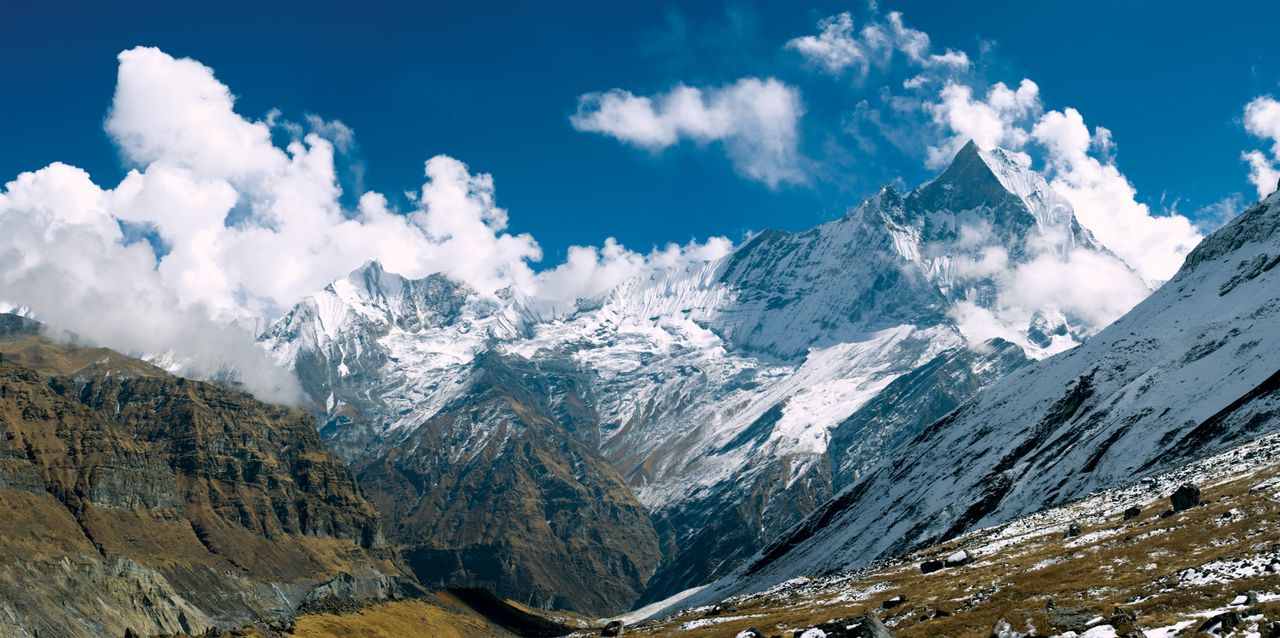
Api Himal Base Camp Trek
Thirteen days into Darchula, the far north-west corner of Nepal, beneath Api at 7,132 m — a region that receives fewer trekkers in a year than Poon Hill sees on a good morning.