Manaslu Region
A restricted region in Gorkha built around the eighth-highest mountain on earth, with a single long gorge leading to a 5,106 m pass and a sacred side valley branching off it.
, Nepal
5,106m
Max Elevation
14-20 days
Duration
Challenging
Difficulty
🗓️
Best Time
March to May, September to November
About Manaslu Region
The Annapurna Circuit as it used to be
People describe Manaslu as what the Annapurna Circuit was before the road, and for once the comparison is accurate. A long walk up one river system, a high pass at the top, a descent into different country on the far side — and, because it is a restricted area, a fraction of the traffic.
The trade is comfort. Lodges here are simpler, the gorge section is genuinely rough, and you cannot walk it alone or without an agency.
The permit rules, which decide whether you can come at all
| Requirement | What it means |
|---|---|
| Restricted Area Permit | Agency-issued only — you cannot buy one yourself |
| No minimum party size | The two-person rule was dropped in March 2026 |
| Licensed guide | A condition of the permit |
| MCAP | Manaslu Conservation Area permit, required alongside |
| ACAP | Also needed, because the circuit exits through the Annapurna area |
| Seasonal fee | Higher September to November than the rest of the year |
The two-trekker minimum that used to apply to restricted-area permits was removed in March 2026, so travelling alone is no longer a barrier to getting one. The agency and guide requirements remain.
Two routes, one region
The Manaslu Circuit runs up the Budhi Gandaki from Machha Khola, through Jagat and Philim to Samagaun at 3,530 m, then over Larke La (5,106 m) and down to Dharapani, where it joins the Annapurna Circuit trail. Fourteen to eighteen days.
The Tsum Valley branches north at Lokpa, into a Buddhist beyul — a valley the tradition treats as a sacred refuge — where the community keeps a vow against killing animals. It needs its own restricted-area permit on top of the Manaslu one. Fourteen days on its own, or eighteen to twenty combined with the circuit.
Combining them is the better trip if you have the time, and they are genuinely different in character: Tsum is contemplative and low by Himalayan standards, the circuit is a high-pass expedition. See the Tsum Valley page for the valley itself.
The gorge, and what the walking is like
The first four or five days follow the Budhi Gandaki through a deep, narrow gorge, on trail cut into the hillside above the river and crossing repeatedly on suspension bridges. It is dramatic, it is exposed in places, and in the monsoon it is genuinely hazardous with landslides.
Above Philim the valley opens and the country turns Tibetan — mani walls, chortens, barley terraces and flat-roofed stone houses. Samagaun at 3,530 m is the natural acclimatisation stop, with side walks to Manaslu Base Camp and Birendra Lake.
Larke La
Crossed from Dharamsala at around 4,460 m, starting before dawn. It is a long day — four to five hours to the pass at 5,106 m and then a descent of more than 1,500 m to Bimthang on the far side, which is harder on knees than the climb is on lungs.
The pass holds snow into spring and can close after heavy weather. Any sensible itinerary keeps a spare day for it, because the only alternative to crossing is walking the whole gorge back out.
Manaslu or the Annapurna Circuit?
If you want quiet, a stronger sense of remoteness and a single continuous route, take Manaslu. If you want better lodges, no permit restrictions, the option of shortening the trip partway, and side trips like Tilicho, take the Annapurna region — and be honest with yourself about the road.
When to go
Late September to November is the most settled, with Larke La usually clear. March to May works well and is quieter, though the pass holds snow into April.
Winter closes the pass and empties the high villages. The monsoon is the one season to rule out entirely here, because of the gorge rather than the pass.
Where to go next
- Tsum Valley — A sacred Himalayan valley closed to outsiders until 2008, where killing animals has been forbidden by community agreement for over a century
- Kathmandu Valley — Seven UNESCO Monument Zones within an hour of each other
- Annapurna Region — The most varied trekking region in Nepal and the most accessible
Related activities: Trekking in Nepal, Cultural & Heritage Tours, Photography Tours in Nepal.
Or see every trip we run: all trekking and tour packages.
Key Highlights
Manaslu (8,163 m), the eighth-highest mountain in the world
Larke La (5,106 m), the pass that closes the circuit
The Budhi Gandaki gorge — days of narrow, dramatic river trail
The Tsum Valley branch, a Buddhist beyul with its own permit
Restricted-area rules keep trekker numbers far below Annapurna
Road access at both ends — no internal flight needed
Geography & Terrain
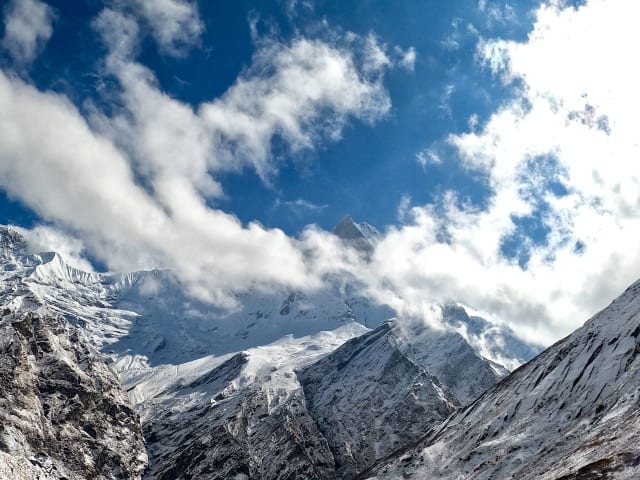
The region features diverse landscapes from lush valleys to towering peaks.
Culture & People
Experience rich cultural heritage and warm hospitality of local communities.
Wildlife & Nature
Diverse flora and fauna unique to the Himalayan ecosystem.
Conservation
Protected areas ensure preservation of this unique ecosystem.

Travel Tips for Manaslu Region
Essential information to help you prepare for your adventure and make the most of your journey
Emergency Contacts
Tourist Police
+977-1-4247041
Shamar Treks
+977-9849052053
Emergency Services
100 (Police) / 102 (Ambulance)