Tsum Valley
A sacred Himalayan valley closed to outsiders until 2008, where killing animals has been forbidden by community agreement for over a century.
, Nepal
3,700m
Max Elevation
14-20 days
Duration
Challenging
Difficulty
🗓️
Best Time
March to May, September to November
About Tsum Valley
Why this valley is different from the trek it branches off
Tsum shares its first days with the Manaslu Circuit and then turns north into a side valley that most Manaslu trekkers never enter. The circuit is a mountain trek with culture along the way. Tsum is the opposite: the culture is the reason to go, and the mountains are the setting.
It was closed to foreigners entirely until 2008. The isolation was geographic before it was administrative — the valley is hard to enter and leads nowhere except Tibet — and the result is a Tibetan Buddhist community that has continued with unusually little interruption.
The non-violence agreement
This is the fact that makes Tsum genuinely unusual. Following the teaching of a lama in the early twentieth century, the valley's communities agreed to prohibit the killing of animals — no hunting, no slaughter, no meat production. The agreement, known locally as shyagya, has been observed since around 1920 and predates any Nepali conservation law.
The practical effects are visible. Wildlife is unusually unafraid. Blue sheep graze near the trail. And meals in the valley are vegetarian, which is worth knowing in advance rather than discovering at dinner.
The monasteries
Mu Gompa (3,700 m), at the head of the valley near the Tibetan border, is the highest and the natural end point of the trek. Rachen Gompa is a nunnery housing a substantial community of Buddhist nuns — considerably larger than most visitors expect, and a very different atmosphere from the monasteries on the main trekking routes.
Piren Phu is a cave associated with Milarepa, the eleventh-century yogi and poet who is among the most significant figures in Tibetan Buddhism. The cave is decorated with murals and remains an active site of devotion rather than a monument.
What the walking involves
The approach is the Budhi Gandaki gorge, shared with Manaslu, which is hot, humid and steep in its lower sections. Above Lokpa the Tsum valley itself opens and the character changes to open, dry, high country with mani walls running for hundreds of metres.
The maximum altitude is only 3,700 m, so this is easier than Manaslu in terms of altitude — but longer than people expect, because the approach and return are substantial.
Permit rules
Tsum is a restricted area with its own permit, separate from the Manaslu one. A licensed guide is mandatory, the two-trekker minimum applies, and the permit must be issued through a registered agency. If you are combining Tsum with the Manaslu Circuit — which most people do — you need both restricted permits plus MCAP and ACAP.
How to behave here
More relevant in Tsum than almost anywhere. Walk clockwise around chortens and mani walls, ask before photographing inside gompas or photographing nuns, and do not bring meat into the valley. Our guides brief this properly at the start rather than correcting you afterwards.
Where to go next
- Manaslu Region — A restricted region in Gorkha built around the eighth-highest mountain on earth, with a single long gorge leading to a 5,106 m pass and a sacred side valley branching off it
- Upper Mustang — A former Tibetan kingdom in the rain shadow north of the Annapurnas
- Shey Phoksundo & Dolpo — Nepal's deepest lake, and beyond it the Bon heartland of Upper Dolpo
Related activities: Trekking in Nepal, Cultural & Heritage Tours.
Or see every trip we run: all trekking and tour packages.
Key Highlights
Mu Gompa (3,700 m), the valley's highest monastery
Milarepa's meditation cave at Piren Phu
A valley-wide non-violence agreement observed since 1920
Rachen Gompa, one of Nepal's larger nunneries
Tibetan Buddhist culture with almost no outside influence
Geography & Terrain
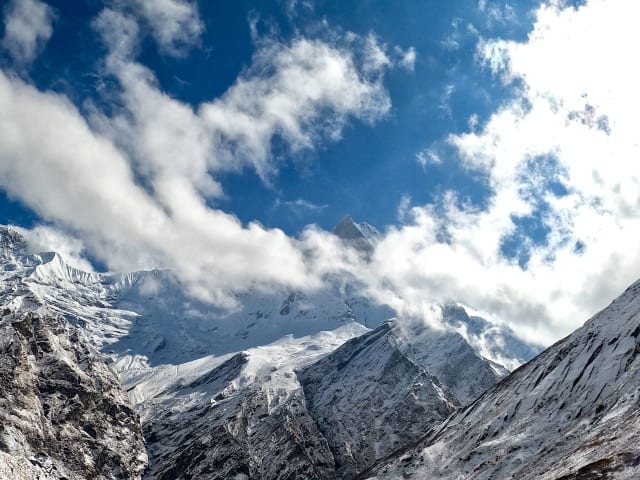
The region features diverse landscapes from lush valleys to towering peaks.
Culture & People
Experience rich cultural heritage and warm hospitality of local communities.
Wildlife & Nature
Diverse flora and fauna unique to the Himalayan ecosystem.
Conservation
Protected areas ensure preservation of this unique ecosystem.
Travel Tips for Tsum Valley
Essential information to help you prepare for your adventure and make the most of your journey
Emergency Contacts
Tourist Police
+977-1-4247041
Shamar Treks
+977-9849052053
Emergency Services
100 (Police) / 102 (Ambulance)