Peak Climbing
Explore Peak Climbing
The step up from trekking: a real summit above 6,000 m using crampons, rope and axe, with no previous mountaineering required on the easier peaks.
What a "trekking peak" is
The term is misleading. Nepal's Nepal Mountaineering Association peaks — around thirty of them, mostly between 5,500 m and 6,500 m — are called trekking peaks because of the permit category they fall under, not because you walk up them. They involve glacier travel, fixed rope, crampons and an ice axe.
What is true is that the easier ones require no previous mountaineering experience. The technical skills can be taught in a day at base camp. What cannot be taught in a day is fitness or altitude tolerance.
The three people actually climb
Island Peak (Imja Tse), 6,189 m. The popular choice, usually added to an Everest Base Camp trek. A long summit night, a glacier crossing with crevasses, and a steep headwall climbed on fixed rope — the one part that feels genuinely like mountaineering. Best first 6,000er for most people.
Mera Peak, 6,476 m. The highest of the trekking peaks and technically the easiest — a glacier plod with one short steep section at the top. The difficulty is entirely altitude. Mera also has, from the summit, a view taking in five 8,000 m peaks, which Island Peak does not.
Lobuche East, 6,119 m. More technical than either, with mixed rock and ice and genuine exposure near the summit. The right choice if you have climbed before and want something with more to it.
What you need to bring
Physically: the ability to walk eight to ten hours at altitude on the summit day, having slept badly at 5,000 m. That is the real filter.
Technically, for Island Peak or Mera: nothing in advance. We run a training day at base camp covering crampon technique, ice axe arrest, jumar on fixed rope and abseiling. For Lobuche East we want prior glacier experience.
Acclimatisation is built into the route
This is why Island Peak is nearly always combined with Everest Base Camp rather than approached directly. Two weeks of trekking to 5,364 m before the climb is not tourism, it is the acclimatisation programme — and it is the reason the success rate on that itinerary is far higher than on a fast approach.
Permits and ratio
NMA peak permits are issued by season and are cheaper in winter and monsoon. A climbing guide is mandatory. We run one climbing guide to two climbers on the summit day — lower ratios exist and are cheaper, but on a fixed-rope headwall with a queue behind you, the ratio is what determines whether you turn around in time.
Honest expectations
Summit success on Island Peak runs well below 100%, and the common reasons are weather, a slow team ahead on the headwall, and altitude. A guide who turns you around is doing the job properly. Book the climb as the intention rather than the guarantee.
Available Packages
Choose from our carefully curated packages for this activity
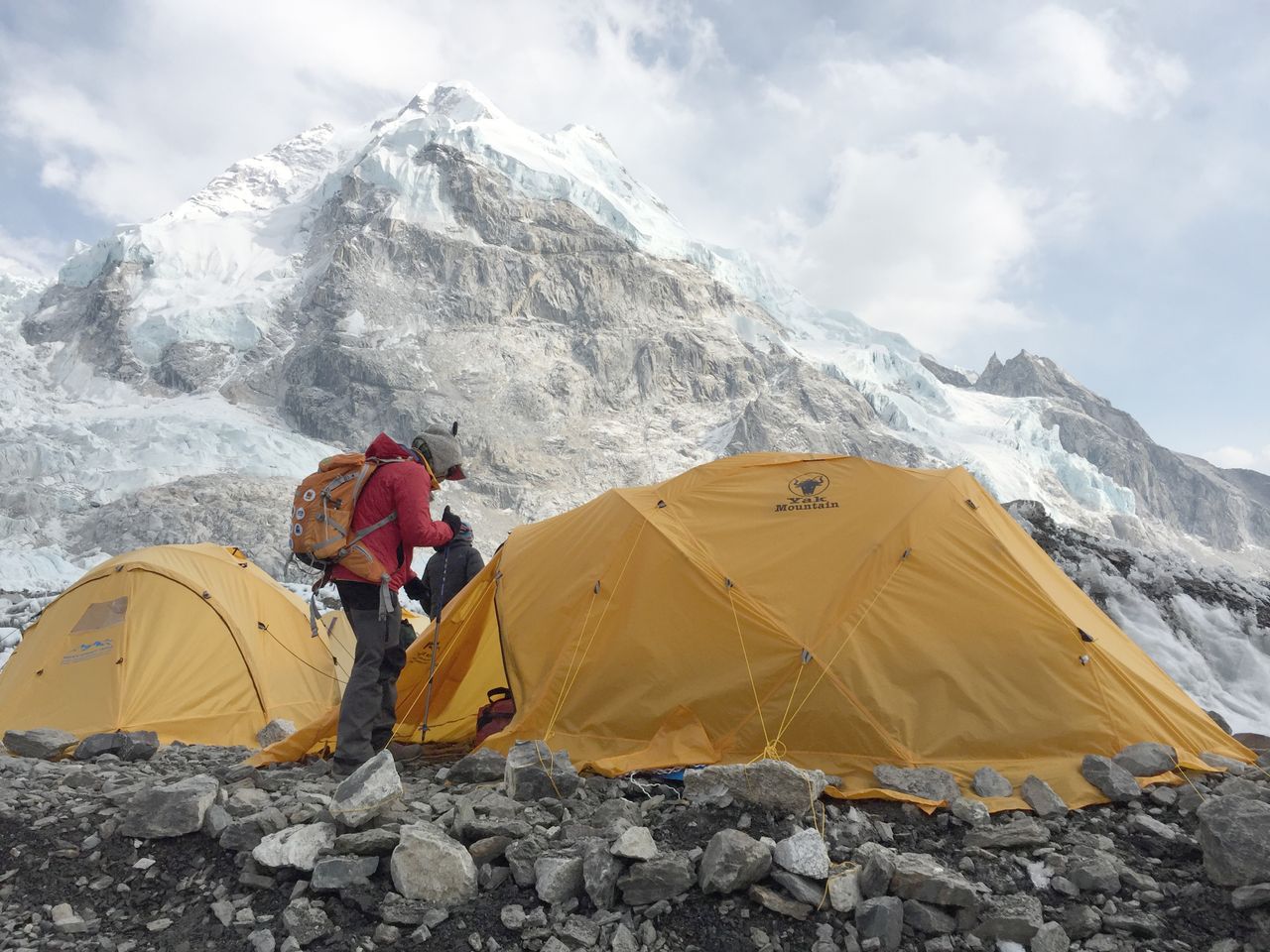
Mera Peak with Everest Base Camp
Eighteen days up the remote Hinku valley to the summit of Mera Peak at 6,476 m, then over the technical Amphu Laptsa pass into the Khumbu and on to Everest Base Camp — an expedition rather than a trek.
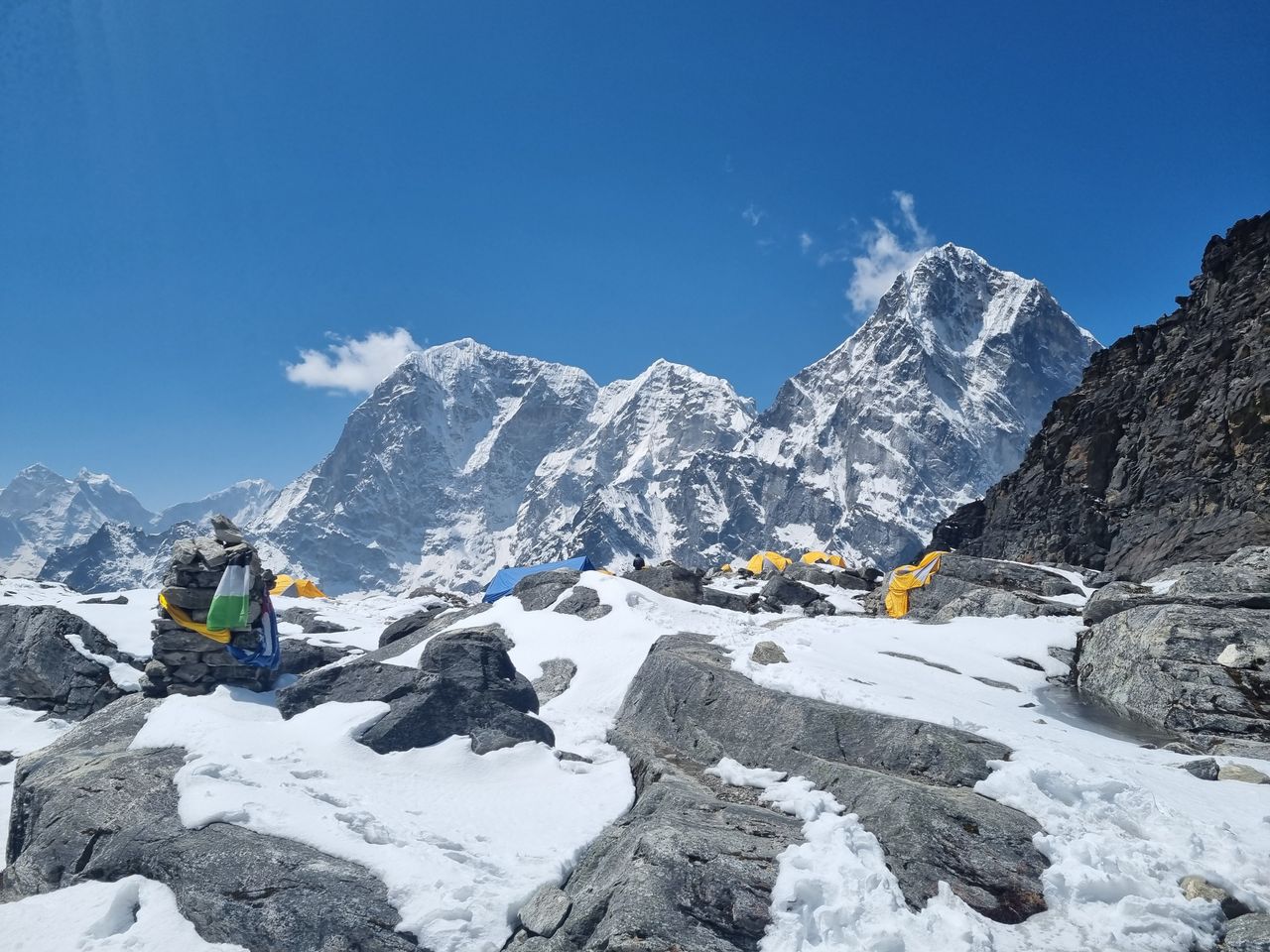
Lobuche Peak with Everest Base Camp
Fifteen days to Everest Base Camp and up Lobuche East at 6,119 m — the peak that rises straight off the Base Camp trail, and the most sustained climbing of the three Khumbu trekking peaks.
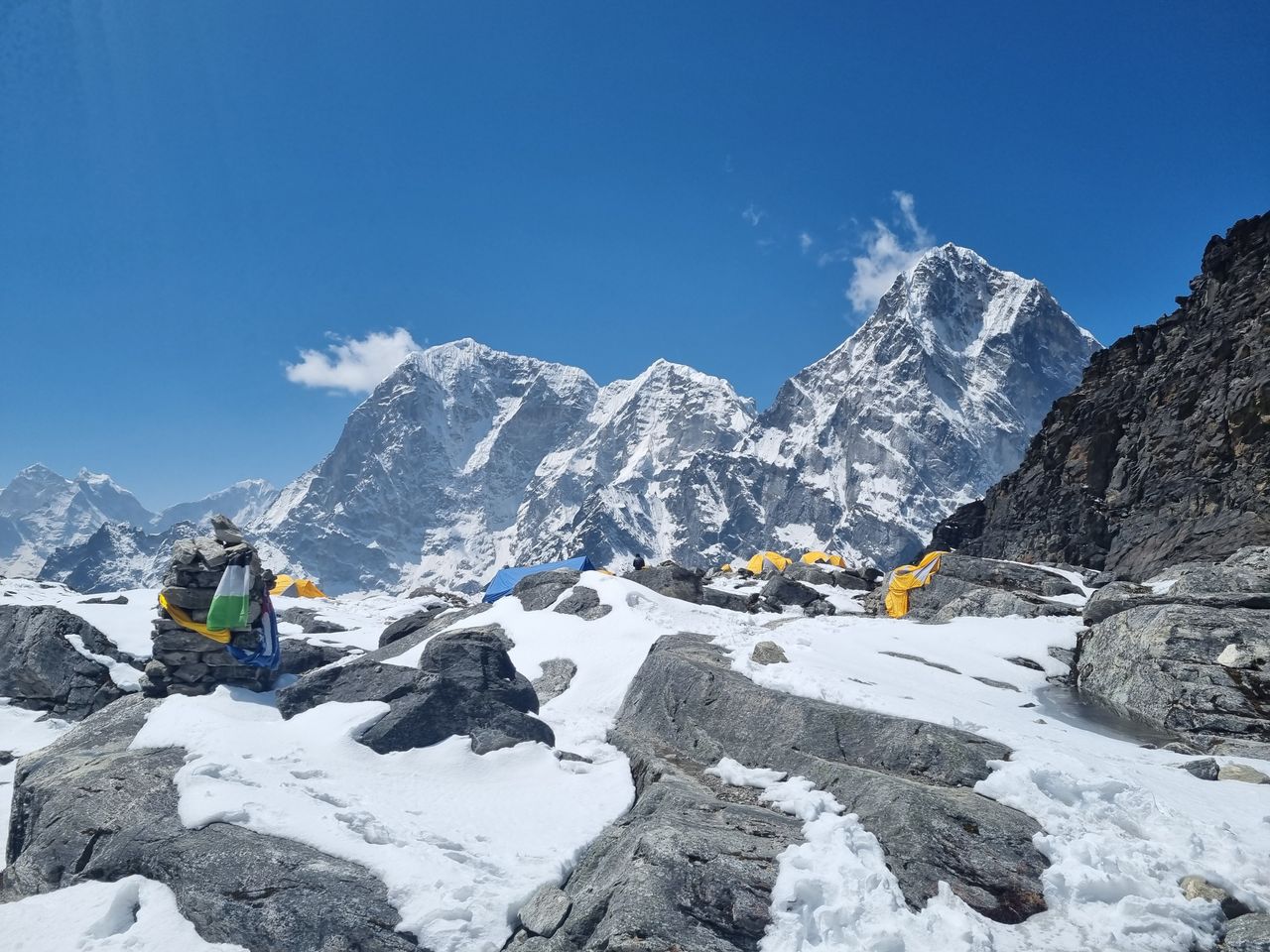
Island Peak with Everest Base Camp
Fifteen days combining the walk to Everest Base Camp with the ascent of Island Peak at 6,189 m — the most accessible first 6,000 m summit in Nepal, and considerably more technical than the phrase "trekking peak" suggests.