First Time in Nepal: A Planning Guide
Visas, flights, altitude, how long you need and which trek to start with — the practical decisions for a first trip to Nepal.
Nepal is an easy country to travel in and a surprisingly easy one to plan badly. The common mistakes are all the same shape: too few days, the wrong month, or a trek chosen on reputation rather than fit. This is the practical version.
How long you need
| Trip length | What fits |
|---|---|
| 7–10 days | A foothill trek of 3–5 days, plus Kathmandu and Pokhara |
| 12–14 days | A high valley — Langtang — or a longer Annapurna route |
| 16–18 days | Everest Base Camp or the Annapurna Circuit, with a buffer |
| 3 weeks+ | A restricted region, a climbing peak, or two treks |
The number people most often get wrong is Everest Base Camp. It is sold as a twelve-day trek; twelve days is the walking, not the trip. Add the international flights, a day in Kathmandu at each end and a spare day for Lukla weather, and it is sixteen to eighteen.
Getting in
Most nationalities get a visa on arrival at Kathmandu airport, issued for 15, 30 or 90 days. You fill in a form at a kiosk, pay in cash or by card depending on the day, and queue. Bring a passport photograph and US dollars as a fallback — the card machines are not always working, and the queue is considerably shorter if you have completed the online form in advance.
Check your own nationality's position before booking; a small number of countries need a visa in advance.
When to come
Briefly: October and November for the clearest mountains and the biggest crowds, March to May for warmth and rhododendron, December for empty trails and hard cold. The monsoon from June to August rules out most of the country — but not Upper Mustang or Dolpo, which sit in the rain shadow and are genuinely in season then.
Our month-by-month guide goes through each one properly.
Which trek to start with
The honest filter is altitude tolerance, which you cannot know in advance, and days available, which you can.
- If you have under a week: a foothill route in the Annapurna region. Poon Hill is the classic and the busiest; Muldai is higher and far quieter; Mardi Himal is the best four days available if you do not mind basic lodges.
- If you have ten days and no altitude experience: Langtang. No flight, sleeps below 4,000 m, and still reaches a 4,985 m viewpoint as a day walk.
- If you have a fortnight and want the famous one: Everest Base Camp, understanding that the crowds in October are real.
What we would gently discourage on a first trip: a restricted-area trek, a climbing peak, or any itinerary that compresses acclimatisation to save days.
Altitude, in one paragraph
Anything above 2,500 m counts. Symptoms — headache, poor sleep, no appetite, breathlessness on stairs — are common above 3,500 m and usually resolve with a rest day at the same height. Fitness does not protect you; going slowly does. Any itinerary worth booking has acclimatisation days built in, and those are the first thing a cheap quote removes.
Kathmandu and Pokhara
Both are worth days rather than hours, and they are completely different.
Kathmandu is dense, loud and extraordinary — three UNESCO durbar squares, Boudhanath, Pashupatinath and Swayambhunath, all within the valley. Two days is a reasonable minimum. Thamel is where the gear shops and most hotels are; it is not representative of the city.
Pokhara is the trekking gateway and a genuinely relaxing lakeside town with the Annapurnas on the skyline. It is the natural place to lose a day before or after a trek, and the paragliding is among the best in the world.
What to sort before you fly
- Travel insurance covering helicopter evacuation to the altitude you are going to. Read the exclusions. Many standard policies cap out at 4,000 m or exclude anything on a rope.
- Boots you have walked in. Not negotiable, and not rentable.
- A spare day at the end. Flights cancel and roads close; this is routine, not bad luck.
- Cash in US dollars or euros to change, plus enough rupees for the trail.
Everything else — down jacket, sleeping bag, duffel, poles — can be bought or rented in Kathmandu or Pokhara in an afternoon, usually cheaper than at home.
What surprises people
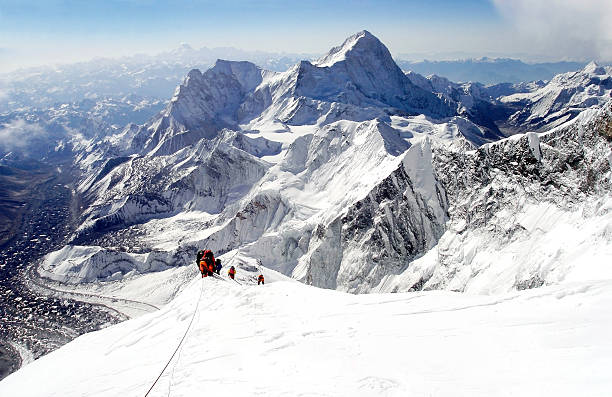
That there is no card payment on any trekking trail. That the lodges are unheated apart from the dining room. That dal bhat comes with free refills and is the best thing on the menu. That the walking is rarely technical and the difficulty is nearly all altitude and repetition. And that the mountains are considerably bigger, closer and more vertical than any photograph has prepared you for.
Still have questions?
Send us a message and our Kathmandu team will get back to you by email.